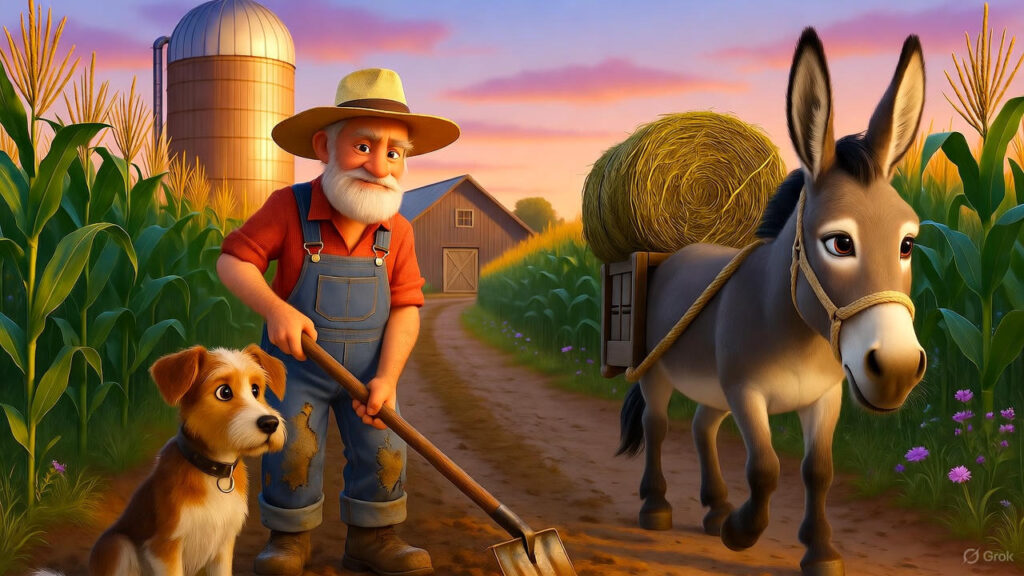
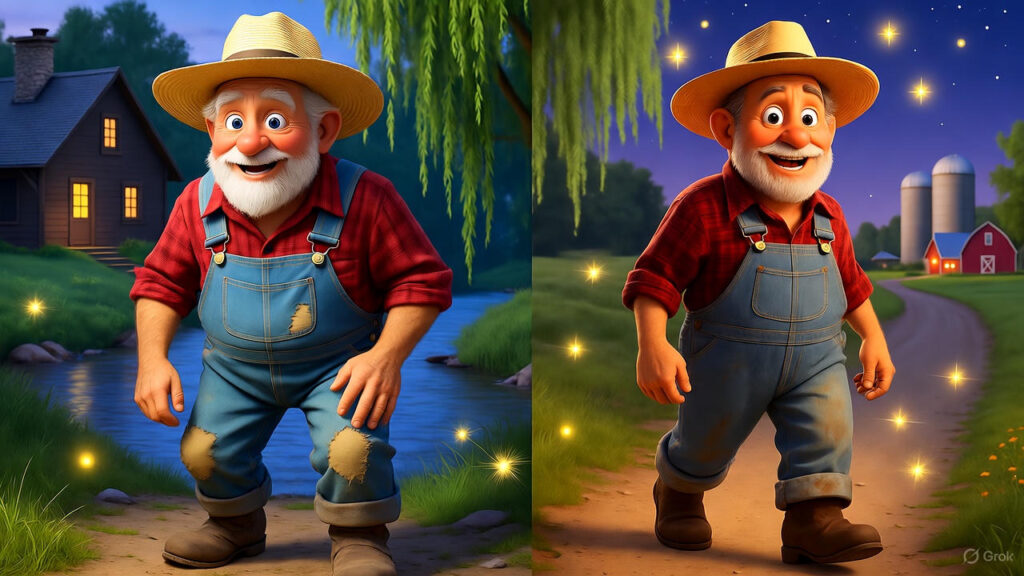
In a dusty lil’ farm town tucked away in the heart of corn country, where the sunsets paint the silos gold and the air smells like fresh-turned earth and hay, there lived a weathered old farmer named Jed. He scratched out a livin’ from the stubborn soil, day in and day out. Jed had himself a loyal ol’ dog named Buster to guard the fields from varmints and thieves, and a stubborn ol’ donkey named Earl to haul the heavy loads of hay bales and harvest crates up the rutted dirt roads.

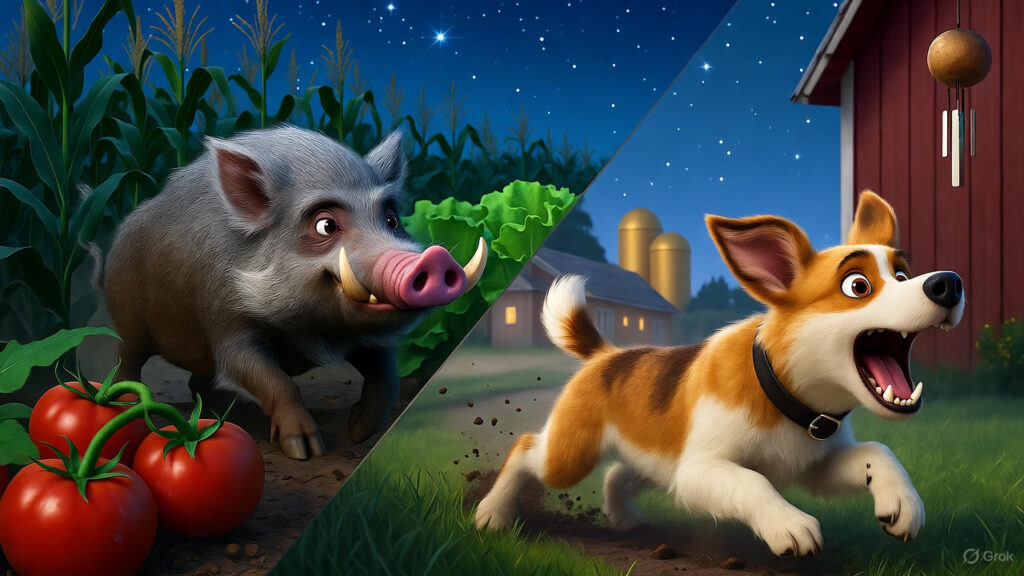
One pitch-black night, under a sky full of stars that twinkled like scattered fireflies, there came a rustle-rustle in the shadows, like whispers from the devil himself. Somethin’ sneaky was out there chompin’ away at the tender young crops—crunchin’ through the rows of ripe tomatoes and crisp lettuces like they was free candy at a county fair. Buster, that scruffy mutt with ears perked like radar, bolts over faster than a jackrabbit on moonshine, his paws kickin’ up clods of dirt. He locks eyes on a pack of wild hogs, those bristly beasts with tusks gleamin’ mean in the moonlight, tearin’ up the veggies in a frenzy of snorts and squeals. Buster don’t hesitate—starts barkin’ like crazy, a deep, thunderous roar that echoes off the barn and rattles the wind chimes, wakin’ every owl and frog for miles.
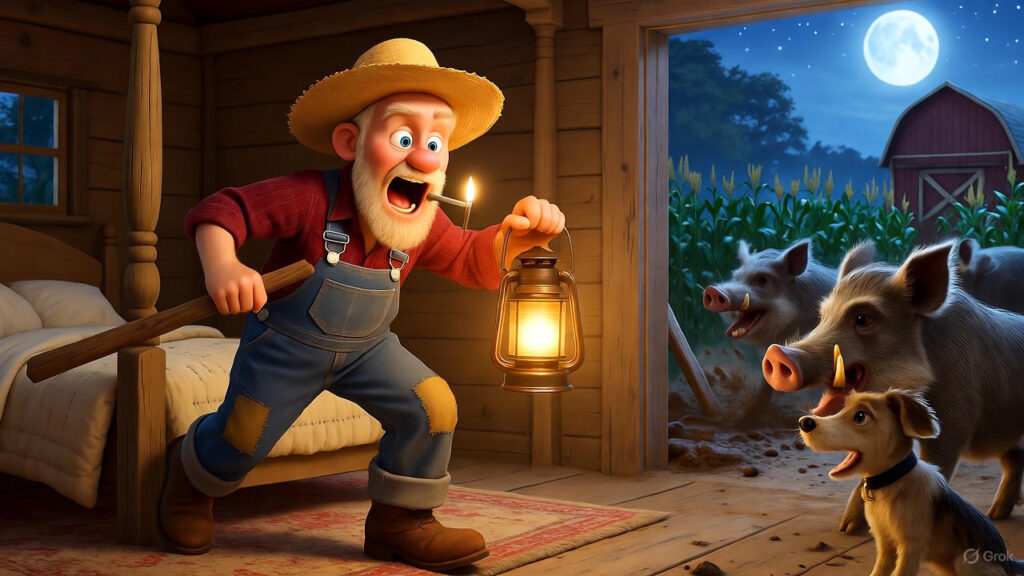
Jed, snorin’ away in his creaky four-poster bed with quilts his mama stitched by hand, jumps outta bed like he’d been shot from a cannon, heart poundin’ harder than a blacksmith’s hammer. He fumbles in the dark for his lantern, lights it with a match that flares bright as judgment day, then grabs a big ol’ hickory stick from by the door—the kind that’s been whittlin’ down fences and fencin’ off fools for years. Whack-whack! He swings it fierce, hollerin’ curses that’d make a sailor blush, chasin’ those hogs clean outta there in a whirlwind of mud and squeals, their fat hides vanishin’ into the treeline like ghosts at dawn.
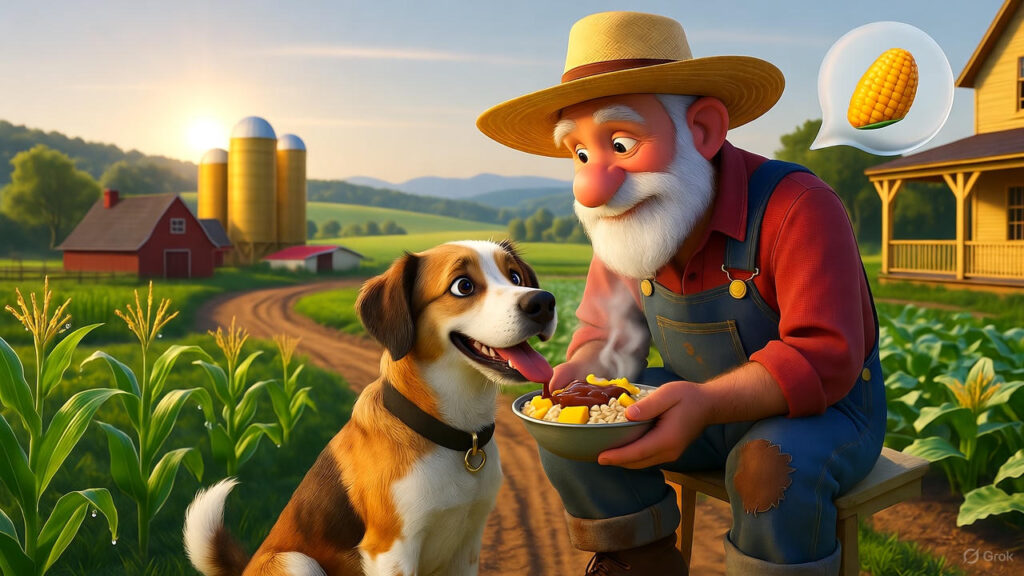
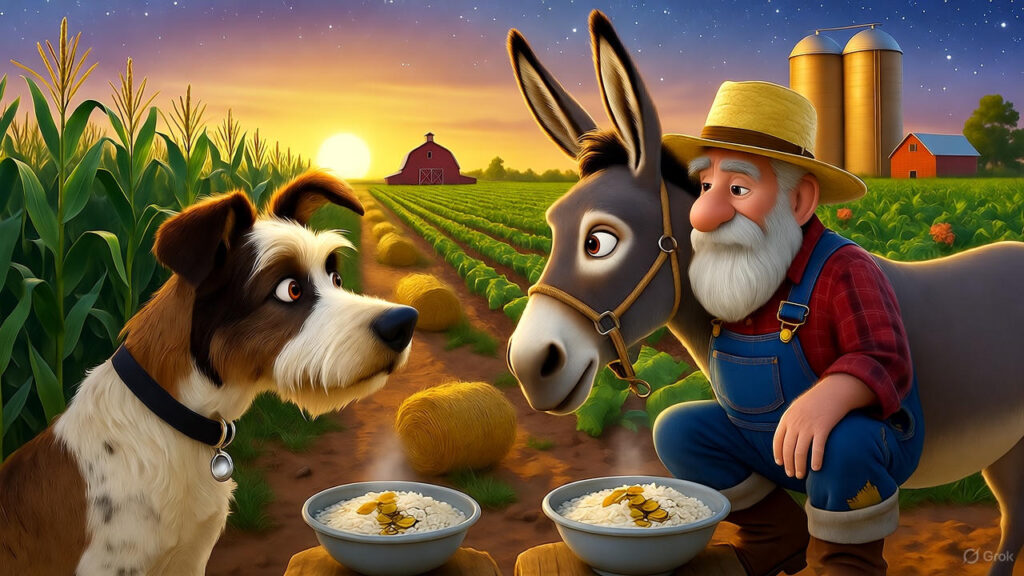
Next mornin’, with the sun peekin’ over the hills like a shy schoolboy and the dew still kissin’ the leaves, Jed shuffles out to the porch in his patched overalls, feelin’ grateful as a preacher on payday. He dumps a huge bowl of steamin’ rice—mixed with scraps of leftover cornbread and a splash of gravy—right in front of Buster, who’s sittin’ pretty with his tail thumpin’ the ground like a bass drum. “Good boy! You saved the whole dang harvest, you ol’ rascal. Eat up—you earned every kernel.”
Earl the donkey, that long-eared beast with a coat gray as storm clouds and eyes sharp as a peddler’s bargain, is watchin’ the whole show from his pen, ears flappin’ lazy in the breeze. He’s chewin’ on a mouthful of thistle, but his mind’s racin’ like a fox in a henhouse. “Hold up now… just bark a few times and you get the royal buffet? While I’m out here haulin’ my tail off for a handful of oats and a pat on the head? Nah, that ain’t right.” Earl decides right then and there, mullin’ it over with a flick of his tail: I’m gettin’ in on this action, come hell or high water. Why slave away when yippin’ like a fool pays better?
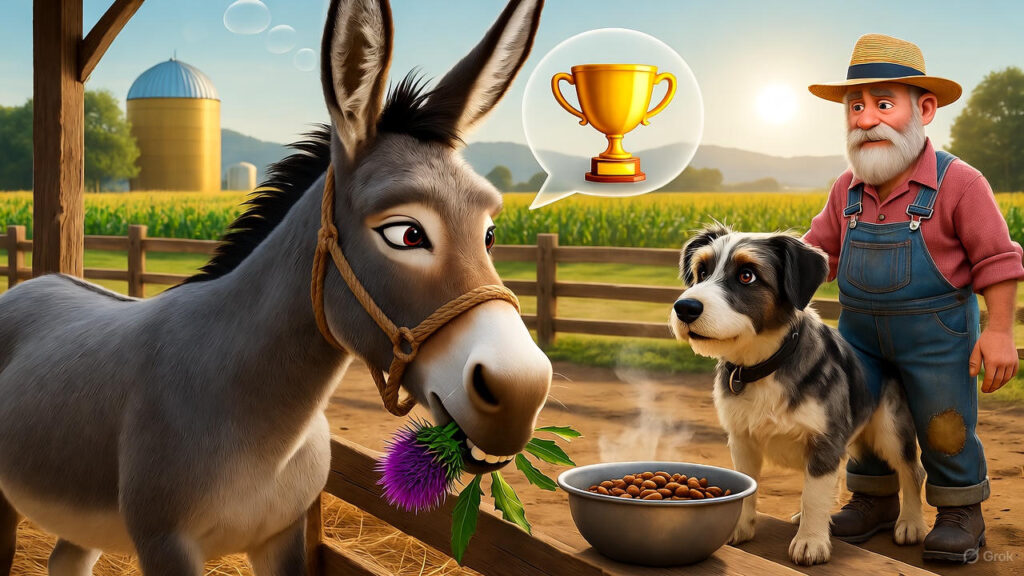
So now? Every whisper of wind through the cornstalks, every leaf that twitches like it’s got secrets, every lonely cricket chirpin’ its night song in the cool grass—Earl goes full tilt, lettin’ loose a HEE-HAW that splits the darkness like a thunderclap, right at 2 a.m. when the world’s deader than a doornail. It echoes across the fields, bouncin’ off the hills and wakin’ the neighbors’ chickens, who cluck in protest till sunrise.
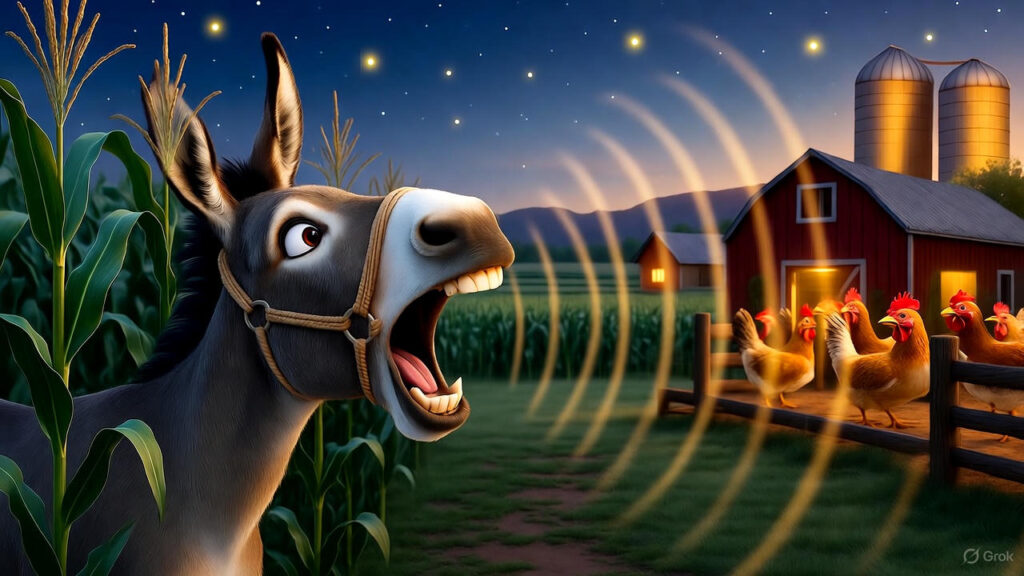
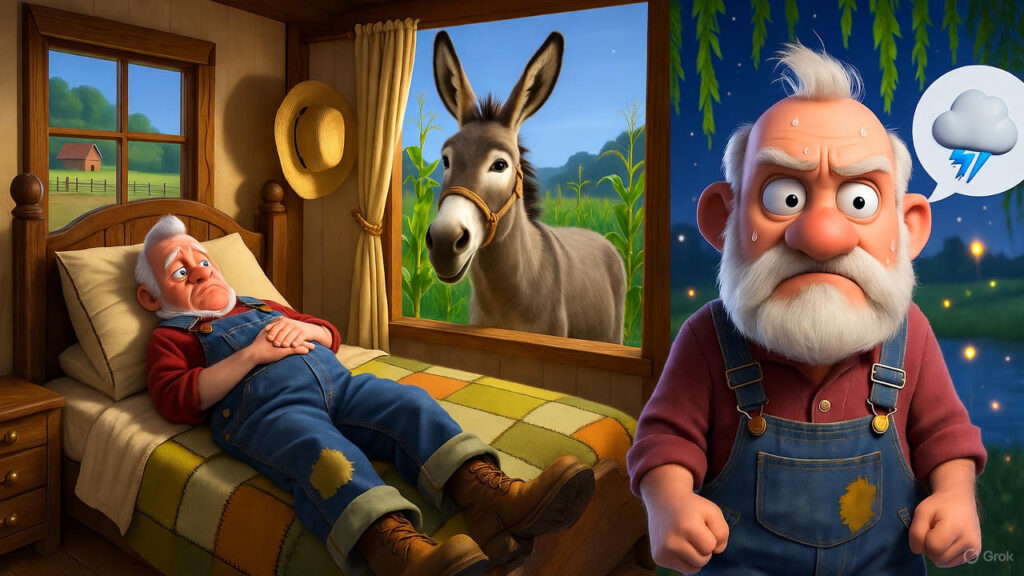
Jed can’t sleep a wink no more, tossin’ and turnin’ in sheets twisted like a hangman’s noose, his eyes red as a fox’s brush and his temper shorter than a politician’s promise. He’s like, “What in the sam hill is goin’ on out there? Is the devil himself throwin’ a hoedown?” By the third night, he’s at his wit’s end, stompin’ over to his wise ol’ Grandpa’s cabin down by the creek, where the fireflies dance and the willows weep into the water. “Pawpaw, you gotta help me. This fool donkey’s tryin’ to out-bark the dog, and I ain’t slept since the hogs came callin’.”
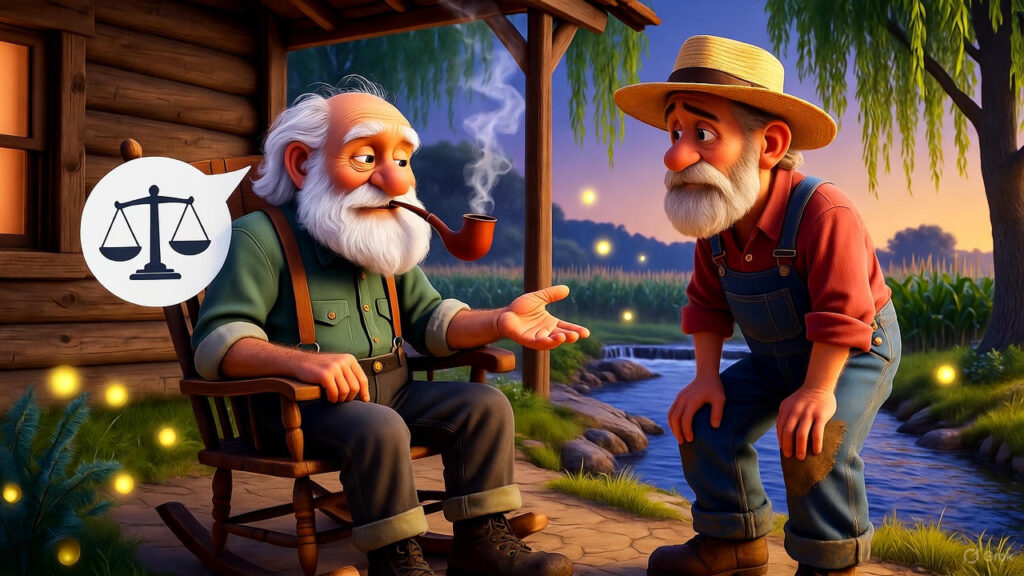
Wise ol’ Grandpa, sittin’ in his rockin’ chair with a pipe puffin’ sweet tobacco smoke and eyes twinklin’ like he’d seen it all twice, leans forward slow as molasses. He’s got wrinkles deep as plow furrows and a voice gravelly from years of yarn-spinnin’ by the hearth. “Listen here, boy—if you got two young’uns in the house, scrappin’ over toys and attention, you don’t play favorites, now do ya? One gets the candy, the other’s gonna raise Cain till the cows come home. Same with animals, Jed. That donkey’s good or bad, treat ’em equal as the day is long. Same food in their bowls, same love in your voice when the work’s done. Fair’s fair, or the whole barnyard turns to bedlam.”
Light bulb moment hits Jed like a summer storm—clear as creek water, bright as a harvest moon. He slaps his knee, chucklin’ at his own thick skull, and heads home with a plan firmer than fresh concrete.
From then on? Buster guards the fields with that fierce, watchful eye, sniffin’ out trouble before it sprouts. Earl hauls the loads steady and sure, ears flappin’ content as he plods the paths. Both get the same chow at day’s end—steamin’ bowls of rice and oats mixed with love and a scratch behind the ears—both chill out under the stars without a fuss, tails waggin’ or swishin’ in harmony. The farm hums along peaceful as a hymn, crops growin’ tall, everybody happy as clams at high tide.
Moral, lil’ dude? Stick to your lane like a mule to the furrow, do your job with heart and grit, and don’t go chasin’ someone else’s reward—it’ll just leave you brayin’ at shadows till the cows come home.