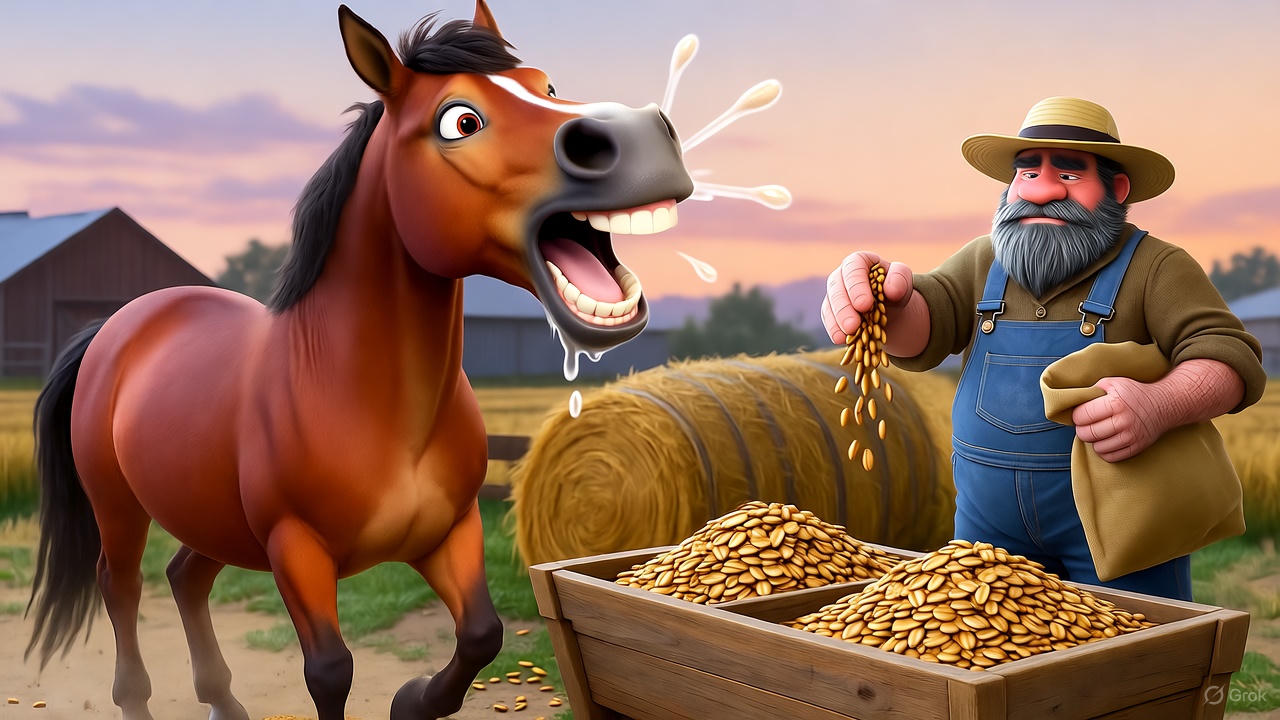
So, kids, listen up—gather ’round the ol’ campfire or that rickety porch swing if you’re feelin’ lazy, ’cause I’m ’bout to spin you a yarn that’ll have ya chucklin’ like a hen in a dust bath! Once upon a time, way back when the world was a whole lot dustier and the nights smelled like fresh-plowed earth mixed with wild honeysuckle, in a little village out in the sticks—y’know, the kinda place where the nearest town’s a half-day’s hike and the biggest excitement’s a barn dance on Saturday—there were a bunch of farmers livin’ their best life, sweatin’ under that big ol’ sun from can-till-can’t-see, growin’ crops and all that jazz: corn as tall as a preacher on tiptoes, beans climbin’ fences like they owned ’em, and hay bales stacked high enough to block the moon.
Now, one of these farmers—let’s call him ol’ Zeke, with a beard like steel wool and hands cracked like dry creek beds from wranglin’ the plow—had this horse, right? A big bay fella with a mane that flopped like a drunkard’s hat and eyes that sparkled with mischief sharper than a switchblade. And this horse? Total foodie, the hungriest beast this side of the Mississippi. No matter how much chow the farmer tossed its way—troughs overflowin’ with oats shiny as gold nuggets, hay bales the size of haystacks (duh), even the occasional apple swiped from the root cellar—this horse was never full, not by a long shot. Like, seriously, dude was always munchin’, hooves pawin’ the ground impatient-like, whinnyin’ at dawn like a dinner bell, beggin’ for seconds before breakfast was even cold.
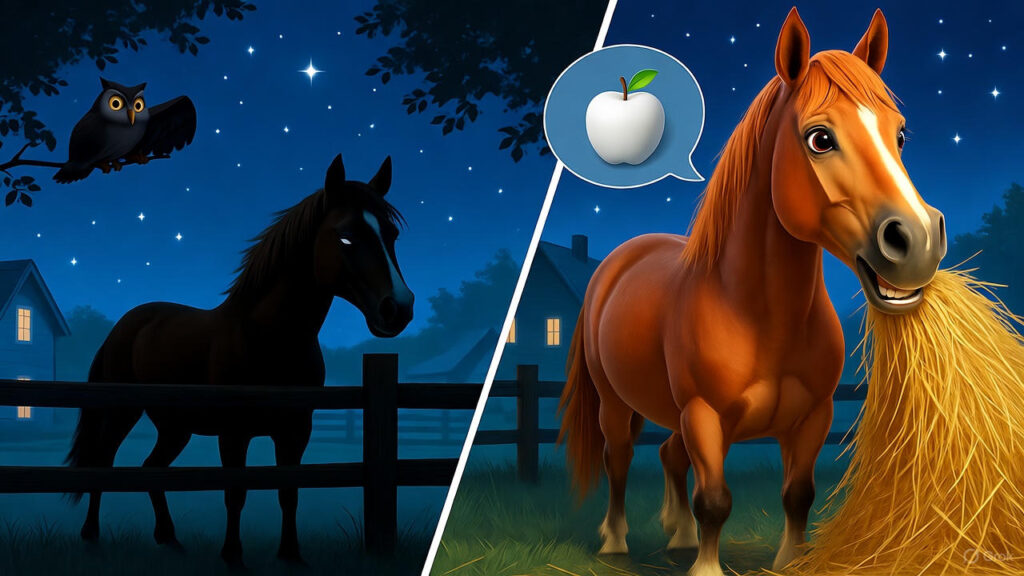
So, what’s a hungry horse gonna do when the belly’s growlin’ louder than a thunderstorm over the holler? It started sneakin’ over to the neighbor’s field under the cover of that inky midnight blue, when the crickets were fiddlin’ their nightly tune and the owls were hootin’ secrets to the stars—slippin’ through the split-rail fence like a shadow with hooves, swipin’ all their hay like it was a buffet at the county fair, jaws workin’ overtime, leavin’ nothin’ but trampled stems and a trail of chaff that glittered in the moonlight. Sneaky, right? That horse moved quieter than a cat burglar in wool socks, thinkin’ it was pullin’ off the heist of the century, belly swellin’ like a balloon at a kid’s party.
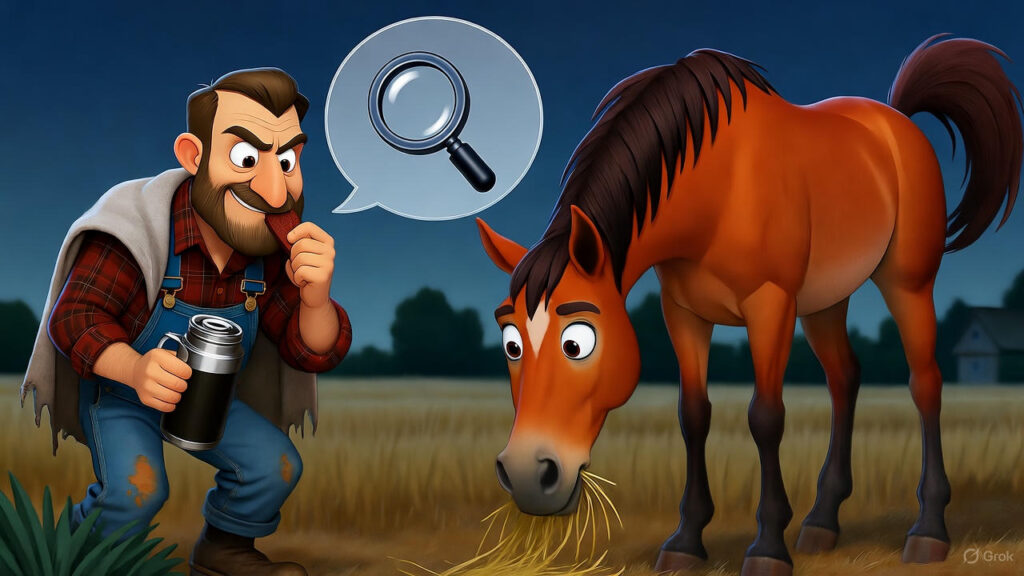
The neighbor farmer—that’s Jed, Zeke’s next-door kin with a squint that could spot a flea on a dog’s back from a quarter-mile—was like, “Yo, who’s jacking all my hay? My barn’s lookin’ barer than a politician’s promises after election day!” So, he decided to play detective, the kinda sleuthin’ that’d make Sherlock tip his deerstalker—hidin’ out at night in a thicket of brambles by the fence line, wrapped in a moth-eaten blanket that smelled like last winter’s chimney soot, munchin’ on jerky and sippin’ from a thermos of black coffee strong enough to wake the dead. And guess what? Just as the moon hit high noon in the sky, he spotted that horse chompin’ away like it was no big deal—head down in the hay, tail swishin’ lazy circles to shoo the skeeters, blissed out on stolen greens without a care for the world.
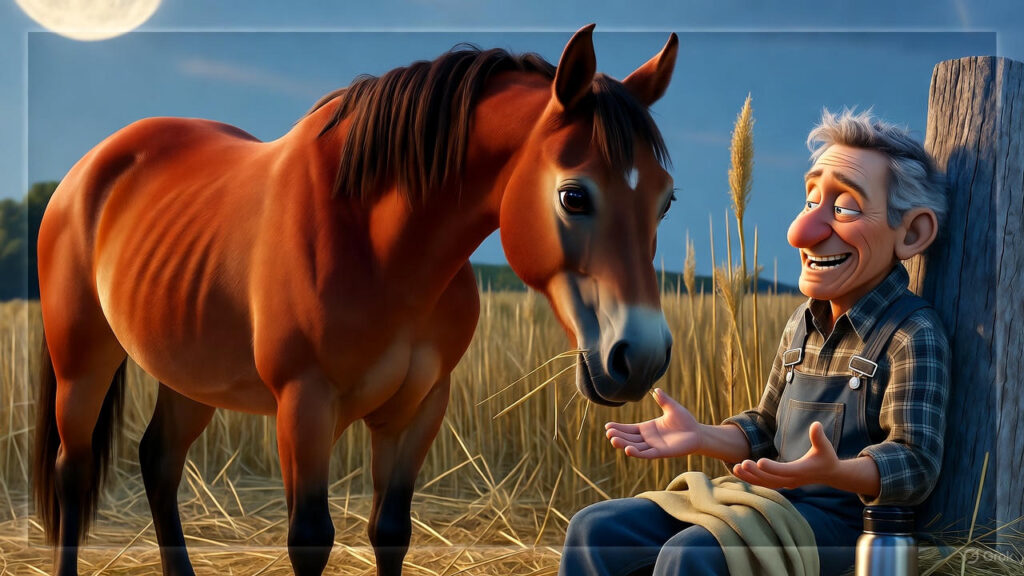
But here’s the kicker—this farmer didn’t get mad, didn’t grab the shotgun or holler up a storm like a blue norther. Nah, he was chill about it, leanin’ back against a fence post with a grin creepin’ slow across his weathered mug like molasses on a biscuit. He was like, “Aight, this horse must be starvin’—poor fella’s ribs are showin’ more than a washboard on laundry day.” Plus, he’d already sold his own horse to a trader headin’ west, so all that hay was just sittin’ there in the field, goin’ to waste, turnin’ brittle and weedy under the sun like yesterday’s news. No harm, no foul, ya know? Just a windfall for the wildlife, or in this case, a four-legged freeloader with impeccable timin’.
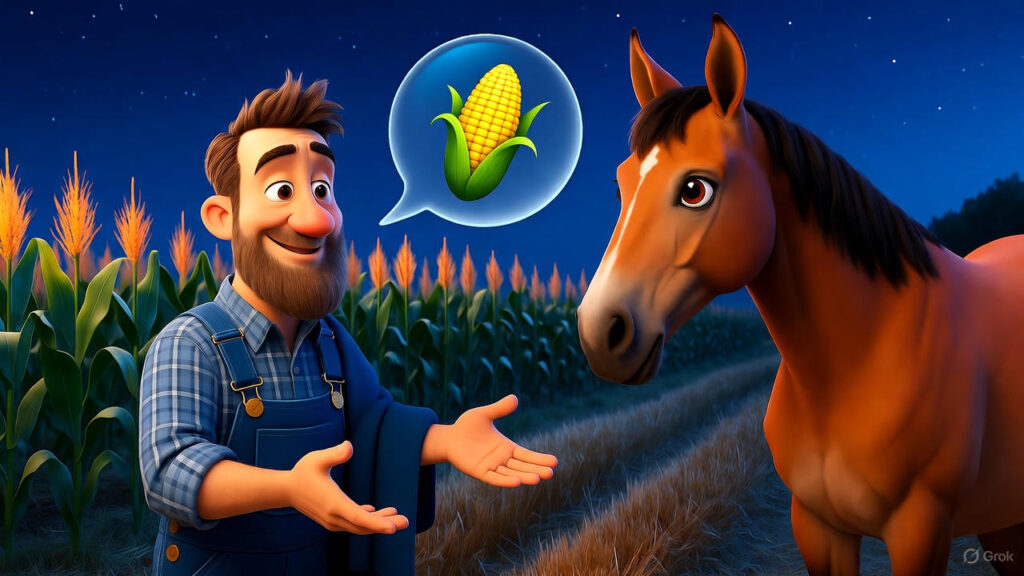
Still, Jed strolled up to the horse slow and easy, boots crunchin’ soft on the stubble like he was approachin’ a skittish colt, hands out peaceful with palms up, and said, “Yo, buddy, you stealin’ my hay? Moonlight’s spillin’ the beans on ya—tail twitchin’ like a give away. That’s cool, I guess, consider it a midnight snack on the house. But don’t go munchin’ on those corn plants in the field over yonder, alright? They’re, like, super tasty, sweeter than candy apples at the fair and juicier than a ripe watermelon bustin’ at the seams—we need those for the silo, can’t have ’em vanishin’ into thin air.”
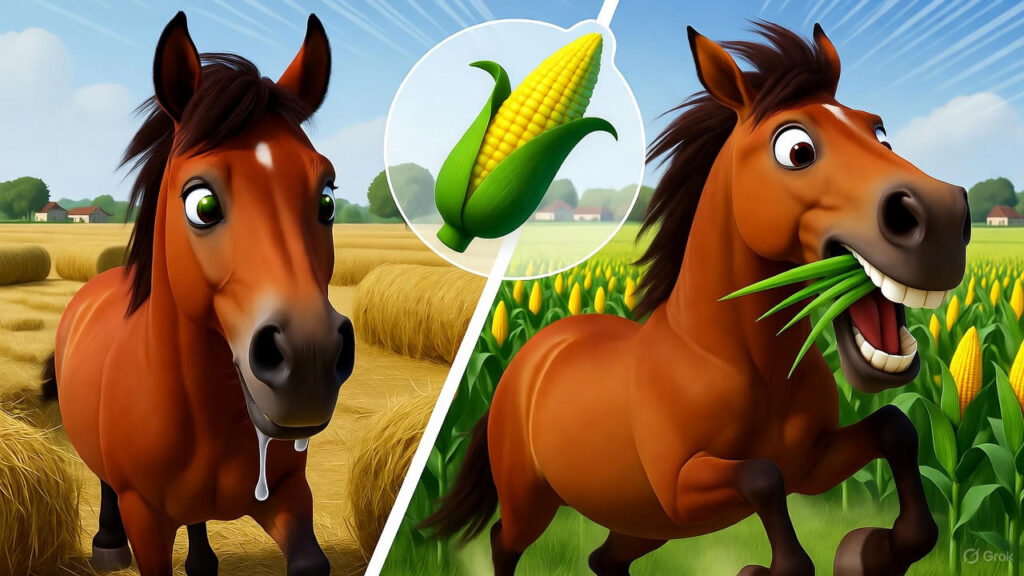
Now, this sneaky horse got to thinkin’, ears flickin’ forward like radar dishes tunin’ in to the good stuff, that greedy glint sparklin’ brighter than a firefly in a jar. It was like, “Whoa, hold up—corn plants? Tasty? Forget this boring hay, dry as old boot leather and half the fun!” Its mouth started waterin’, drool slippin’ down the chin in shiny strings, hooves dancin’ impatient on the dirt like it couldn’t wait another heartbeat. Next thing you know, it zoomed over to the field faster than a jackrabbit on a hot griddle, gobblin’ up every single corn plant like it was at a corn-on-the-cob party—stalks snappin’ crisp under those big yellow teeth, ears pilin’ up in a heap of silk and husks, leavin’ the ground lookin’ like a battlefield after a feast gone wild, totally oblivious to the trap snappin’ shut.
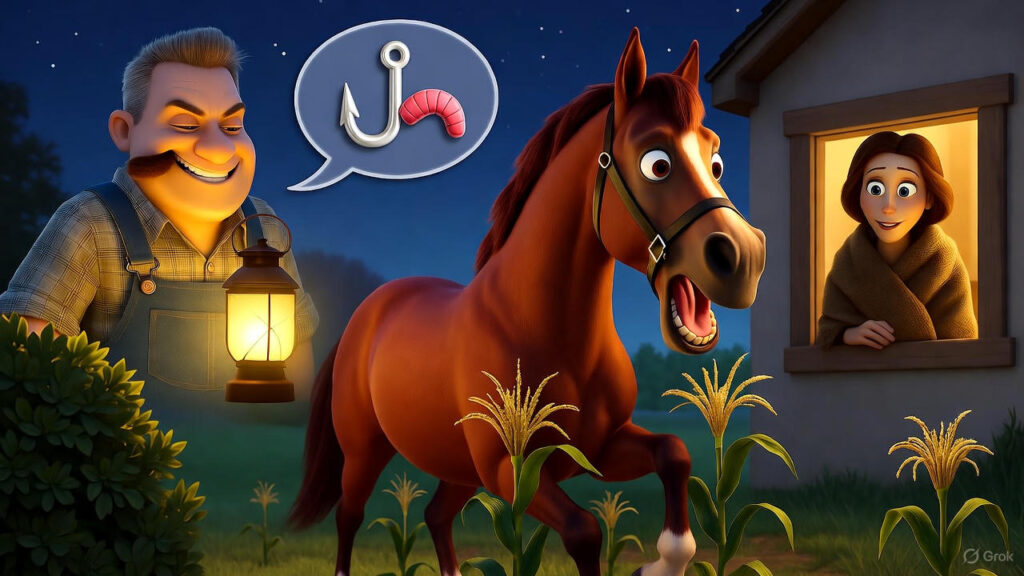
The farmer, watchin’ from the shadows with a lantern dimmed low and a chaw of tobacco tucked in his cheek, cracked up silent at first—a low rumble buildin’ to a belly laugh that shook the bushes—and told his wife, who was peekin’ from the kitchen window with a shawl ’round her shoulders, “Babe, check this out! That sneaky horse is eatin’ all the leftover corn plants we were gonna burn after the harvest—stompin’ through ’em like a tornado in a trailer park. I knew it’d go for ‘em if I said they were tasty, danglin’ the bait like a worm on a hook. Now we don’t gotta spend time or cash torchin’ those plants—matches, sweat, and watchin’ for sparks jumpin’ the fence. Free labor from a four-legged fool!”
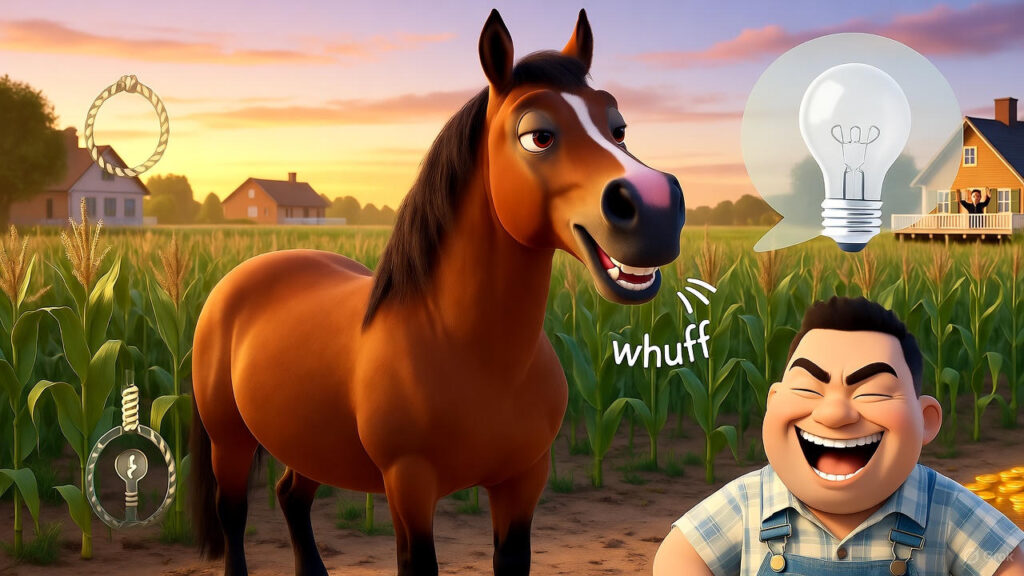
The horse, thinkin’ it was the smartest cookie in the jar—puffin’ out its chest like it just outfoxed the devil himself—finished munchin’ all that corn, burpin’ content with a satisfied whuff, totally clueless that it’d been played like a fiddle at a hoedown. And the farmer? He was over the moon, laughin’ all the way to the bank ‘cause his plan worked like a charm, slicker than owl grease on a doorknob—savin’ him a heap of hassle and turnin’ a pest into a plow hand without liftin’ a finger. Moral of the story, young’uns? A little sweet talk and reverse psychology can wrangle more than any rope, and sometimes the greediest appetite does the dirtiest work for ya.