
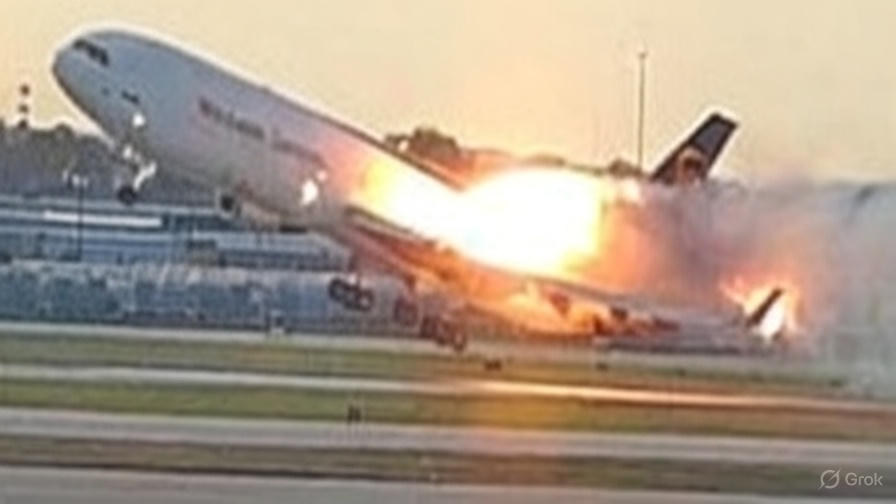
Louisville, KY – November 21, 2025 – The National Transportation Safety Board (NTSB) has released its preliminary report on the devastating UPS Flight 2976 crash on November 4, 2025, confirming that fatigue cracks in the engine mounting hardware led to the separation of the left engine during takeoff, resulting in the loss of 14 lives.
The McDonnell Douglas MD-11F cargo plane, operated by UPS and en route to Honolulu, crashed shortly after departing Louisville Muhammad Ali International Airport. The incident killed all three crew members aboard and 11 people on the ground, while injuring 23 others. The aircraft struck a UPS warehouse and a petroleum recycling facility, creating a half-mile debris field and a massive fireball fueled by approximately 38,000 gallons of jet fuel.
Key Findings from NTSB Preliminary Report
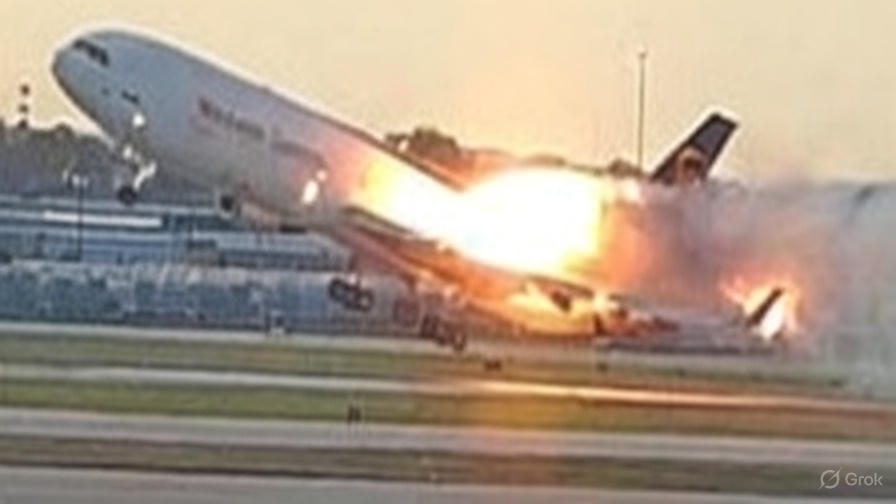
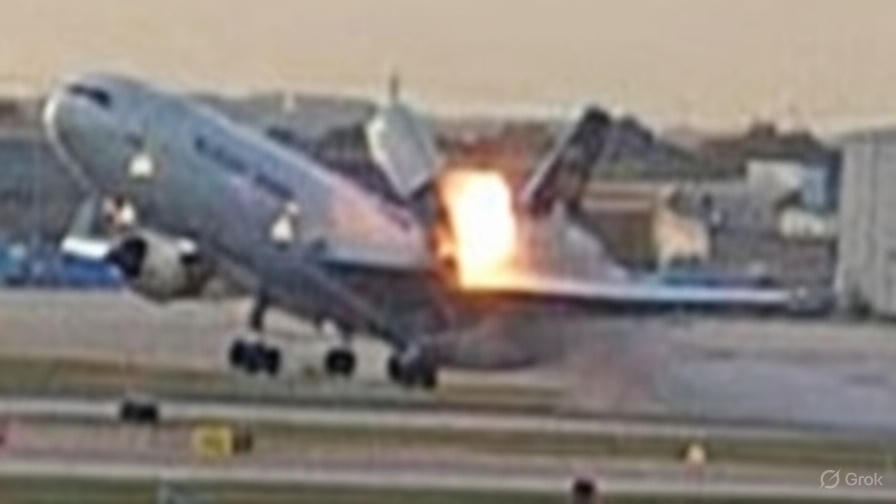
- Engine Separation: Surveillance footage and frame-by-frame photos show the left General Electric engine and pylon detaching from the wing during takeoff rotation. The detached engine struck the aircraft, igniting a fire as the plane briefly became airborne.
- Fatigue Cracks Confirmed: Examination of the left pylon aft mount lug revealed microscopic fatigue cracks – gradual breaks caused by repeated stress from takeoffs, landings, and pressurization cycles – along with areas of overstress failure. Similar cracks were found on the forward lug.
- Flight Path: The plane reached only about 30 feet above ground level, cleared a blast fence at the end of Runway 17R, clipped a warehouse roof with its landing gear, and crashed into an adjacent supply yard.
- Comparisons to Past Crashes: The failure mirrors the 1979 American Airlines Flight 191 DC-10 disaster in Chicago, where engine/pylon separation caused a rollover and crash that killed 273 people.
The 34-year-old aircraft (first delivered in 1991) had undergone maintenance in San Antonio weeks prior. Both the cockpit voice recorder and flight data recorder were recovered in good condition, providing critical data from the flight and previous operations.
Immediate Aftermath and Response
Following the crash – UPS’s first fatal incident since 2013 – the Federal Aviation Administration (FAA) grounded all remaining MD-11 and MD-11F aircraft operated by UPS and FedEx pending inspections. UPS has approximately 25 active MD-11s, with plans to phase out the aging trijet fleet.
UPS issued a statement: “We appreciate the NTSB’s prompt release of preliminary findings and will fully support the investigation through its conclusion.” Boeing, the original manufacturer, added: “We continue to support the investigation… Our deepest condolences go out to the families who lost loved ones.”
Ongoing Investigation
The NTSB emphasizes that the preliminary report does not determine probable cause. A final report, including safety recommendations, is expected in 18-24 months. Investigators are reviewing maintenance records, structural components, and operational history.
This marks one of the deadliest aviation incidents on U.S. soil in recent years, highlighting ongoing concerns about metal fatigue in aging cargo aircraft.
Related searches: UPS plane crash 2025, Louisville airport crash, MD-11 engine failure, NTSB fatigue cracks report